
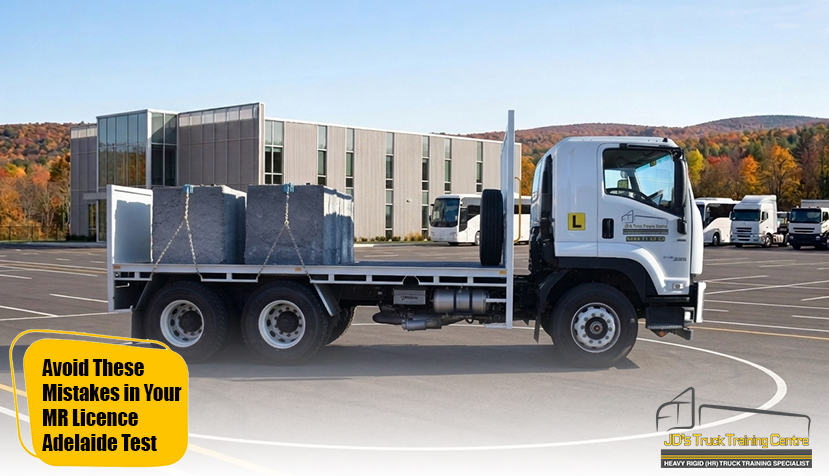
MR licence in Adelaide test demands careful attention. Many hopeful drivers overlook common pitfalls. Avoiding these errors ensures a smoother path to success. You want to pass your test first time. Understanding potential mistakes helps you practice effectively.
Overlooking Pre-Trip Inspection Details
To obtain an MR licence in Adelaide, you must first hold a C class (car) licence for at least one year. The process then involves passing a heavy vehicle knowledge test and undertaking a practical driving assessment with an authorised instructor, ensuring you are competent to drive medium rigid vehicles on South Australian roads.
Failing the pre-trip inspection is a common mistake. You must demonstrate thorough knowledge of your vehicle. Inspectors check lights, tyres, and fluid levels. They also assess critical safety components. A rushed or incomplete inspection often results in immediate failure. Therefore, practice this routine diligently.
Incorrect Gear Selection and Management
Many candidates struggle with proper gear selection. Operating a Medium Rigid Licence Adelaide vehicle requires finesse. Selecting the wrong gear affects vehicle control. It can also cause excessive engine strain. Smooth, timely gear changes are crucial. Practice shifting in various scenarios. This builds essential confidence and competence.
Failing to Maintain Proper Road Position
Maintaining correct road position is vital for safety. Larger vehicles require more space. They have different turning arcs. Drifting within your lane is a common error. Misjudging corners or intersections can also lead to faults. Always be aware of your vehicle’s footprint. Anticipate traffic and road conditions.
Key Test Errors to Avoid
- Bad Observation: Not enough observation of mirrors and blind areas.
- Speed Management: Driving a vehicle at an inappropriate speed for conditions.
- Signalling Mistakes: Forgetting to signal or signalling incorrectly.
- Following Distance: Not keeping enough space from the vehicle ahead.
- Stopping Errors: Stopping abruptly or not smoothly.
Neglecting Lane Discipline and Merging
Merging onto highways or changing lanes poses challenges. Drivers often fail to observe traffic properly. They might merge too slowly or too quickly. This creates dangerous situations for other road users. Maintaining consistent lane discipline is essential. Always use your mirrors and signal effectively.
Inadequate Mirror Checks and Blind Spot Awareness
Using your mirrors consistently is paramount. Larger vehicles have significant blind spots. Examiners closely watch your head checks. Failure to scan your surroundings adequately is a critical fault. Always perform regular mirror checks. Turn your head to confirm blind spots are clear. This ensures maximum safety.
Choosing the Right Training: JD’s Truck Training Centre
JD’s Truck Training Centre helps you avoid these common mistakes. Our experienced instructors provide targeted coaching. We emphasise practical skills and safe driving behaviours. Our comprehensive training prepares you thoroughly. We provide you the confidence to pass your test. You’ll pass with flying colours.
Final Thoughts on Your MR Licence Test
Passing your MR licence in Adelaide test is a major achievement. With practice you can avoid these common mistakes. Trust in expert instruction and your preparation. JD’s Truck Training Centre is your partner. We walk you through it step by step. Drive confidently towards your success.
Read More: What Vehicles Can I Drive with MR Licence?
Frequently Asked Questions
1. What is the most common reason for failing an MR licence test?
Common failures include inadequate pre-trip inspections, poor observation skills, and improper gear changes. These errors often stem from insufficient practice and a lack of attention to detail during the assessment.
2. How important is the pre-trip inspection during the test?
The pre-trip inspection is extremely important. It demonstrates your knowledge of the vehicle’s safety features and your ability to identify potential faults. Failing this section often results in an immediate test termination.
3. Should I practice in both manual and automatic MR vehicles?
If you intend to drive manual MR vehicles, you must train and test in a manual. Practicing in both ensures versatility, but testing in a manual grants you the ability to drive both types.
4. How can I improve my observation skills for the test?
Practice consistent use of mirrors, perform regular head checks for blind spots, and actively scan the road ahead. This habit develops greater situational awareness, crucial for safe heavy vehicle operation.
5. What is the correct following distance for an MR vehicle?
You should maintain a greater following distance than with a car. A general rule is at least 4 seconds in good conditions. This allows for increased stopping distances needed for heavier vehicles.
6. Are there specific manoeuvres I need to master for the test?
Yes, you will need to demonstrate reverse parking, three-point turns, and controlled stops. These manoeuvres assess your ability to control the vehicle in tight spaces and emergency situations effectively.
7. How do I manage nerves on the day of the test?
Proper preparation is key to managing nerves. Ensure you’ve had enough sleep, arrive early, and perform a calming breathing exercise. Trust your training and focus on each task as it comes.
8. Can I bring my own vehicle for the MR licence test?
You generally use a training provider’s vehicle, which is typically well-maintained and familiar to instructors. Using your own vehicle is usually not permitted, as it must meet specific testing standards.
9. What if I make a minor mistake during the test?
Minor mistakes are usually recorded as demerit points. The test continues unless you commit a critical error. Focus on recovering quickly and maintaining your composure for the remainder of the assessment.
10. How does a professional training centre help avoid mistakes?
Professional training centres offer expert instruction, guided practice, and simulated test conditions. Instructors identify and correct your weaknesses, building confidence and reducing the likelihood of critical errors during your actual test.